
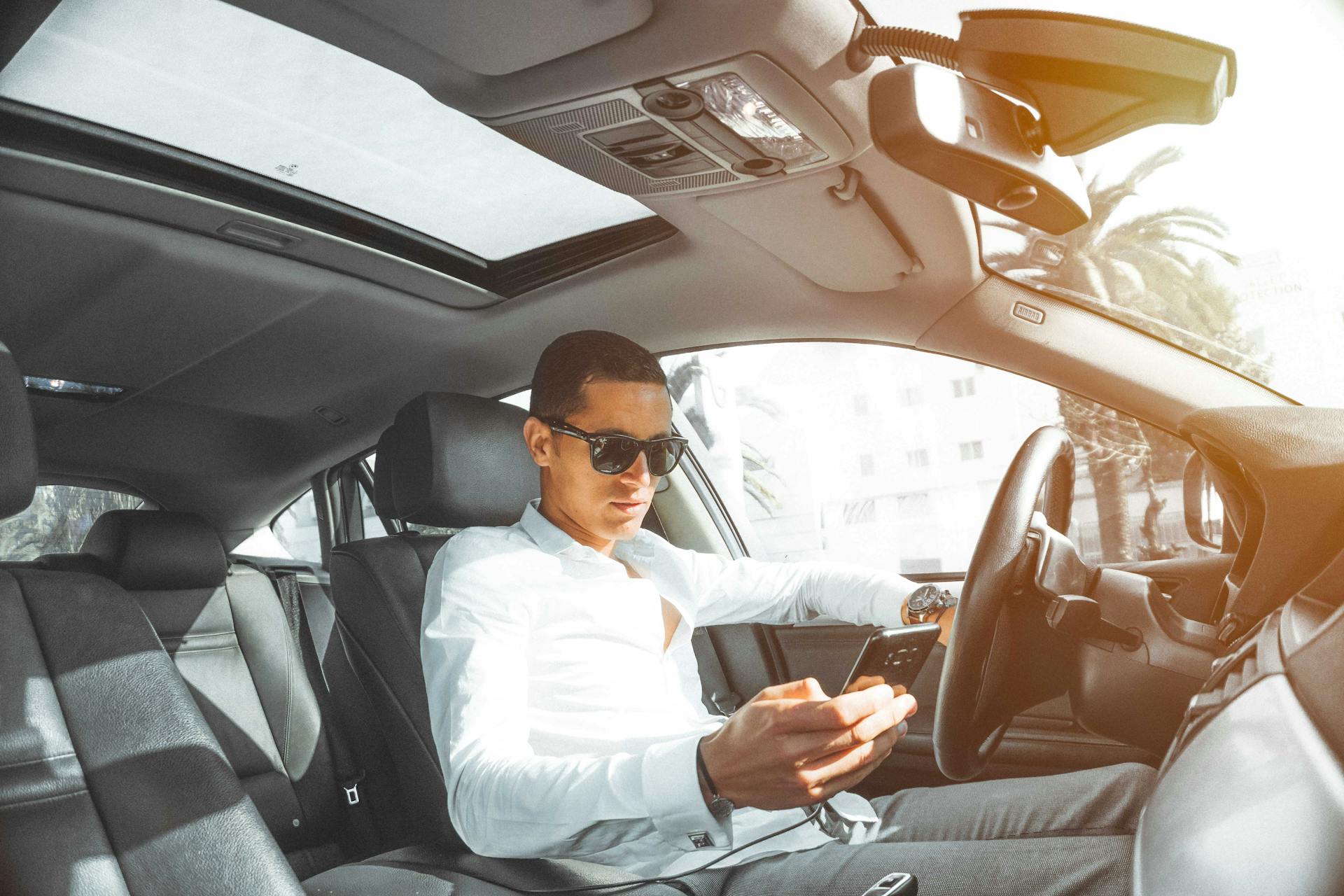
Your car may soon read your mind, literally. Neuro-responsive interfaces are soon to be the next sensation in car technology, with cars that can monitor your attention, predict your actions, and even respond to your thoughts. From Nissan’s Brain-to-Vehicle technology to Mercedes-Benz’s thought-controlled parking, science fiction is rapidly becoming showroom reality. But what is actually possible right now, and what is tomorrow’s fantasy? The neurotech automotive revolution is underway, though it requires careful examination to separate real breakthroughs from hyperbole.
Real-World Neurotech Already in Your Vehicle
Current brain-computer interface automobiles do not yet read your mind, but they do monitor your brain waves. Driver attention monitoring technology is already installed on new EU vehicles, with infrared cameras and AI used to monitor for indicators of fatigue, distraction, and drowsiness patterns.
Attention monitoring technologies that are top of the line include:
- Eye-tracking systems that monitor blink patterns and direction to identify distraction
- Head movement detection to alert against distraction
- Steering pattern to identify drowsy driving patterns
- Heart rate monitoring through steering wheel sensors
Major automobile manufacturers like Honda, Ford, and DS Automobiles have integrated attention monitoring systems using infrared cameras to monitor eyes continuously for fatigue and facial movements for distraction.
Read More: Can You Really Hack Your Brain With a Smart Helmet?
The Experimental Frontier of Brain-Controlled Vehicles
At the forefront of attention monitoring is the future of car neurotech. Nissan’s Brain-to-Vehicle technology uses EEG technology to anticipate the actions of drivers and reduce response time, and Mercedes-Benz has demonstrated brain-computer interface headsets that allow drivers to control parking features with their minds.
Breakthrough example: Researchers developed brain-controlled car systems based on steady-state visual evoked potentials, wherein commands to vehicles are interpreted from intent to drive by the decoding of EEG signals by drivers
The technology does have real promise. The Brain-Computer Interface market was $2.3 billion in 2024 and will be $4.5 billion by 2029, with new BCI technology providing more natural control and better user interfaces.
Read More: How Close Are We to Flying Cars, Really?
Separating Science from Speculation in Automobile Neurotech
While attention monitoring is a mature technology, mind-reading cars are largely experimental. Current neuro-responsive interfaces are extremely adept at monitoring simple states, being awake, being drowsy, being stressed, rather than subtle thought or intention.
What can be done in the near future:
- Improved drowsiness detection through multiple biometric inputs
- Predictive technology that foresees normal driving habits
- Stress-compensating climate and audio
- Easy thought-controlled interface features for accessibility
The hype goes ahead. Actual mind-controlled automobiles have massive technical and safety hurdles that technology has not yet overcome.
Neuro-responsive interfaces are a fascinating intersection of neuroscience and car design, with real-world use already improving driver safety by tracking attention. While brain-computer interface cars that respond to your mind are largely still in the testing phase, the foundation is in place for dramatic human-vehicle interaction beyond standard controls.
The future of automotive neurotech has nothing to do with mind-reading, but designing cars that understand and respond to states of mind. Ready to experience this neuro-automotive revolution firsthand? Visit dealerships with mind-monitoring systems and observe how cars are already responding to drivers’ attitudes
Read More: Augmented Reality Glasses: Are They Finally Worth It?
